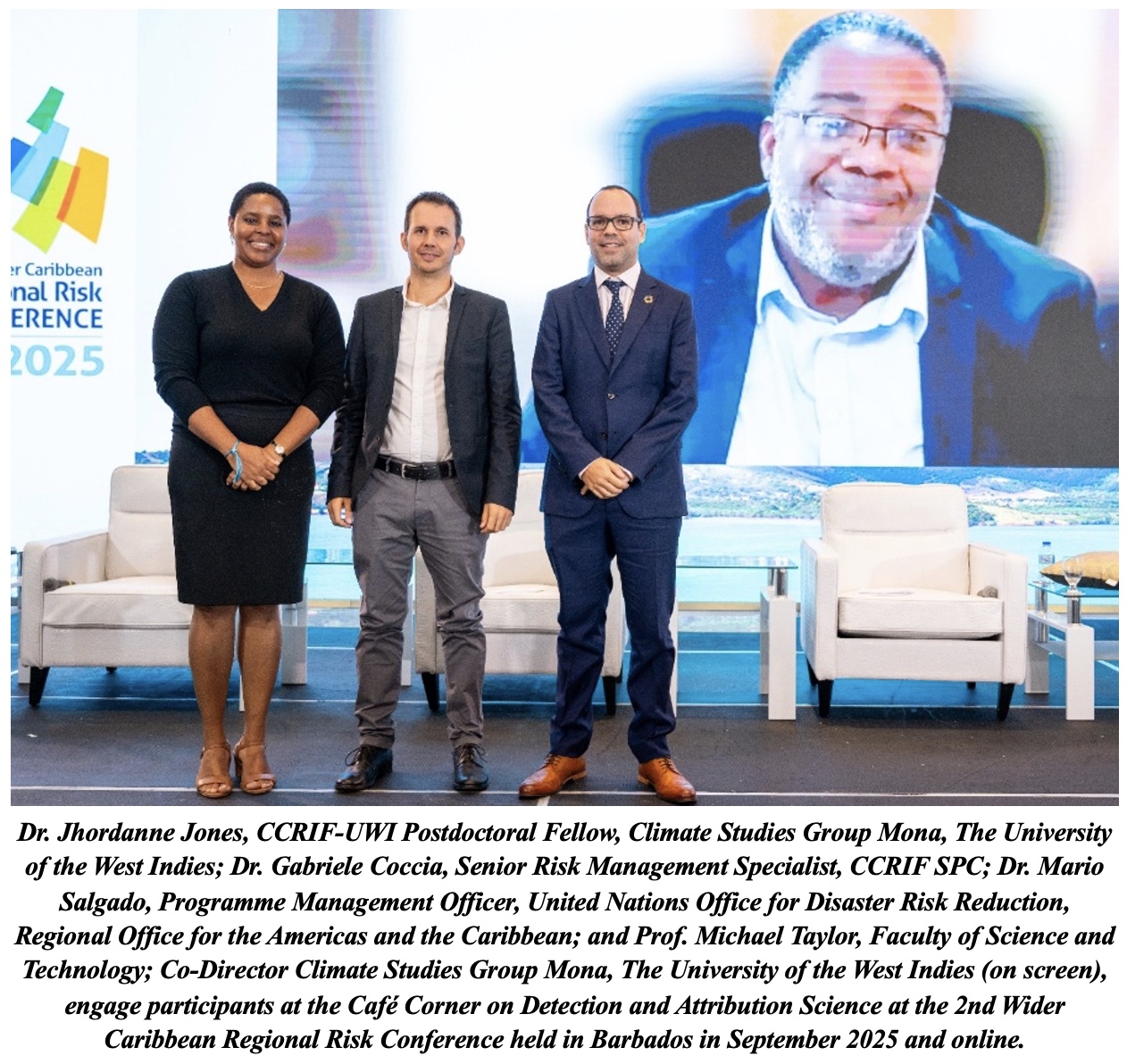
CCRIF and The University of the West Indies (UWI) have taken a bold step to strengthen the Caribbean’s scientific leadership in climate resilience with the launch of a new postdoctoral fellowship in Detection and Attribution (D&A) Science. Announced on December 17, 2025, this fellowship marks CCRIF’s first direct investment in postdoctoral research and represents a major milestone in advancing regional climate analytics and climate‑justice advocacy.
Valued at US$50,000, the fellowship is hosted by the Climate Studies Group Mona (CSGM) and supports cutting‑edge research in tropical cyclone modelling, high‑resolution hurricane simulations, and climate change attribution. These areas of science are essential for understanding how human‑driven climate change is influencing the frequency and intensity of storms affecting the Caribbean.
The fellowship was awarded to Dr. Jhordanne Jones, a NOAA Climate and Global Change Fellow, UWI alumna, and recently appointed Lead Author for Working Group I of the Intergovernmental Panel on Climate Change (IPCC). Dr. Jones’ work focuses on quantifying the influence of climate change on extreme weather events - evidence that is increasingly vital for Caribbean countries seeking fair access to global climate finance, including the Loss and Damage Fund.
CCRIF CEO Isaac Anthony emphasized the strategic importance of this investment, noting that early analyses of Hurricanes Beryl (2024) and Melissa (2025) demonstrate how advanced attribution science can deepen understanding of the region’s evolving risk landscape. “By working closely with UWI, we are building the evidence base needed to improve risk modelling, support resilience planning, and ensure our communities are better prepared for the future,” he said.
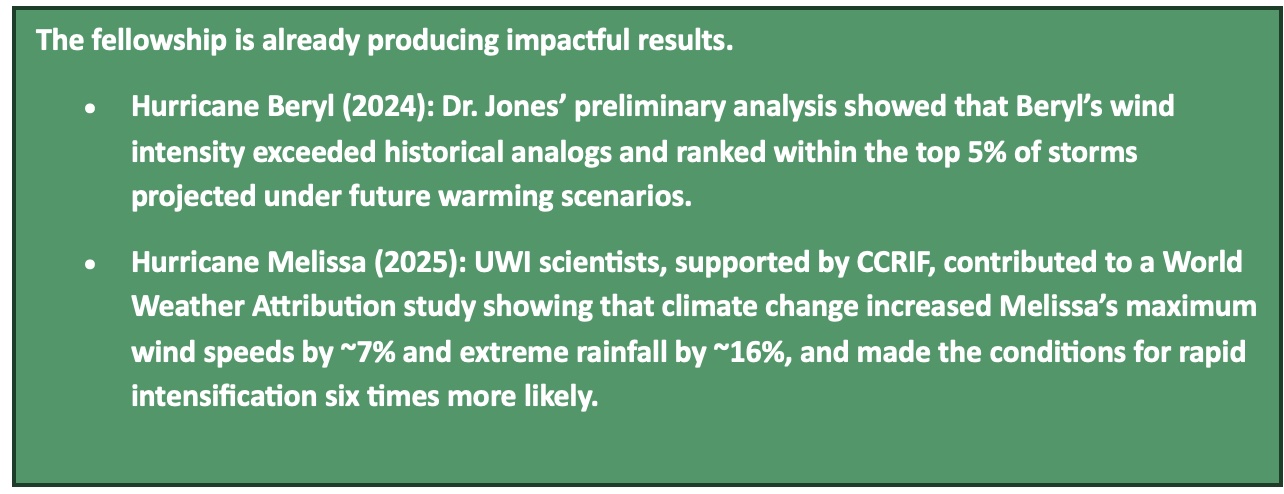
These findings underscore the growing limits of adaptation for small island states and highlight the urgency of strengthening scientific capacity within the region.
Professor Michael Taylor, Dean of the Faculty of Science and Technology and Co‑Director of CSGM, described CCRIF’s investment as “visionary,” noting that it places Caribbean science at the centre of global climate‑justice efforts. Principal of the UWI Mona Campus, Professor Densil Williams, also praised the partnership, emphasizing that the fellowship will help produce the scientific expertise needed to guide policy decisions and support recovery efforts following events like Hurricane Melissa.
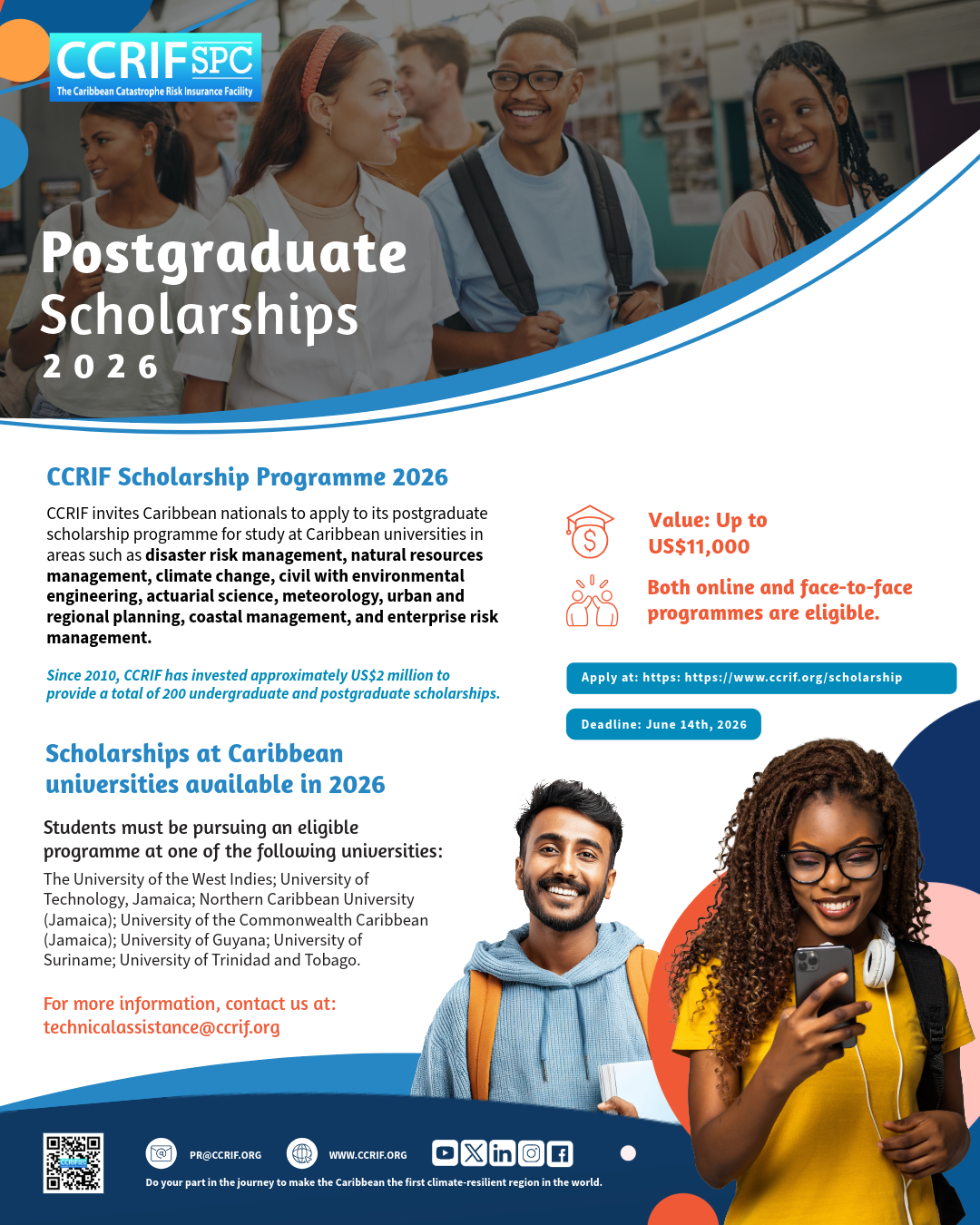
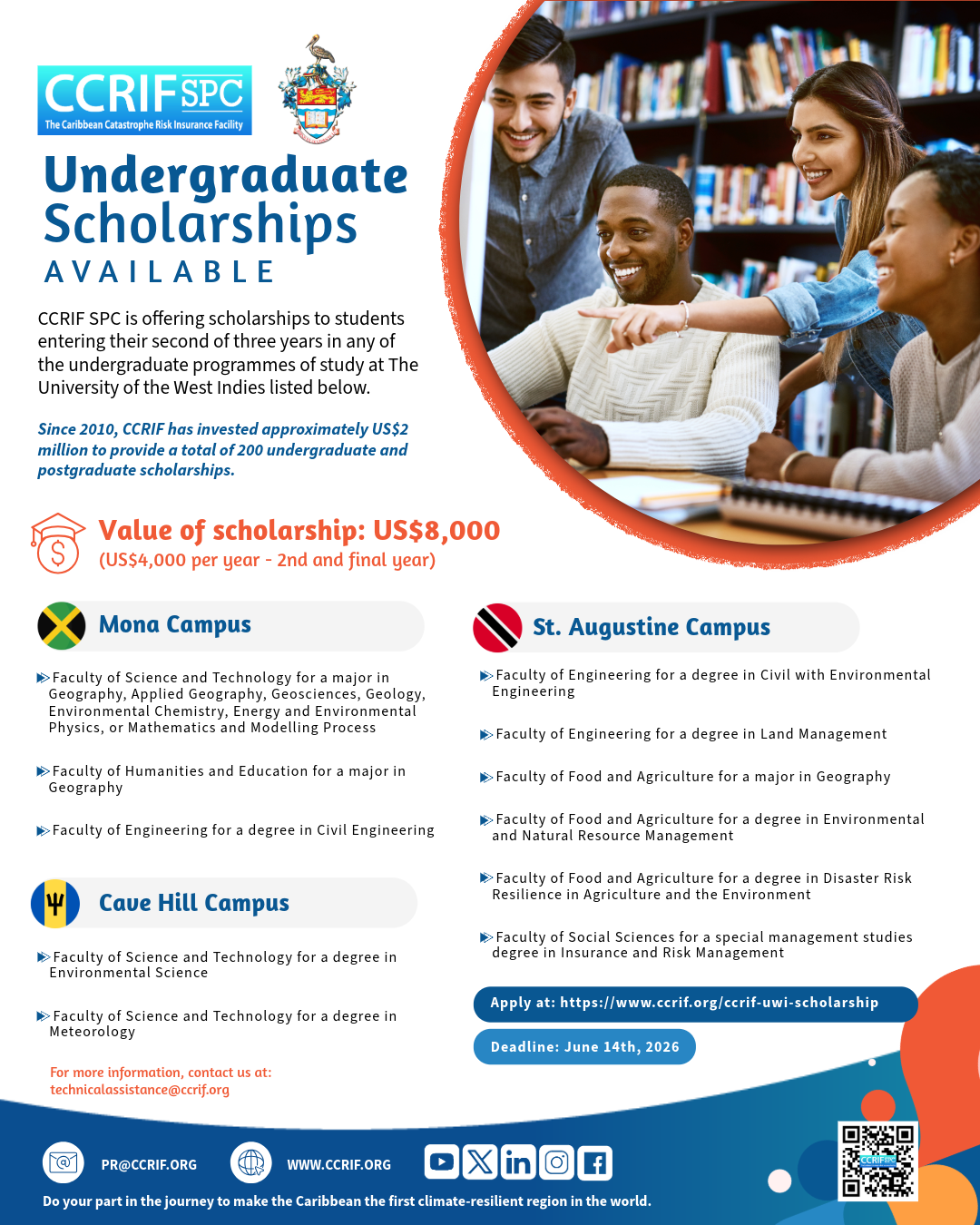
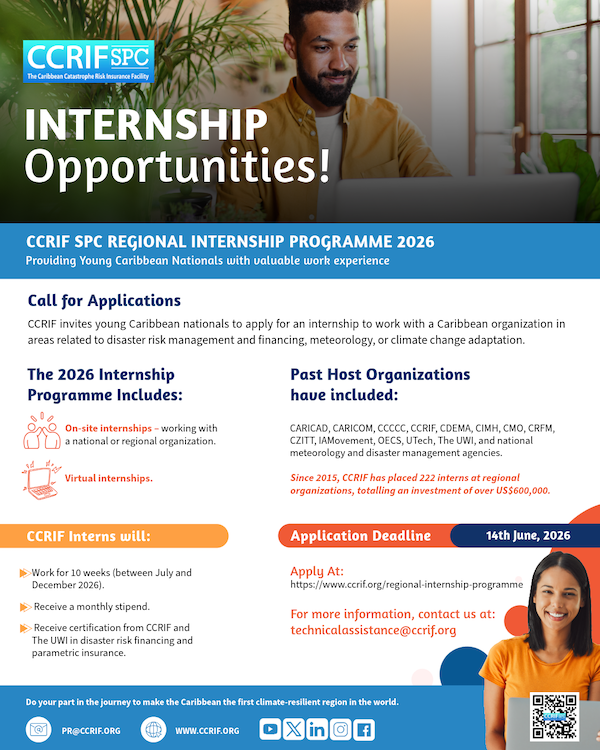
This fellowship builds on a long-standing partnership between CCRIF and The UWI. Between 2010 and 2025, CCRIF provided 169 scholarships valued at US$1.3 million and supported internships for graduates across 14 UWI departments. CCRIF has also funded five research projects focused on sustainable agriculture, nature‑based solutions, and the links between natural hazards and human health.
By linking global methodologies with Caribbean‑specific expertise, CCRIF and The UWI are strengthening the region’s ability to advocate for resilience financing, influence global climate policy, and protect vulnerable communities. This collaboration represents a powerful step toward ensuring that Caribbean voices—and Caribbean science— shape the global climate agenda.